
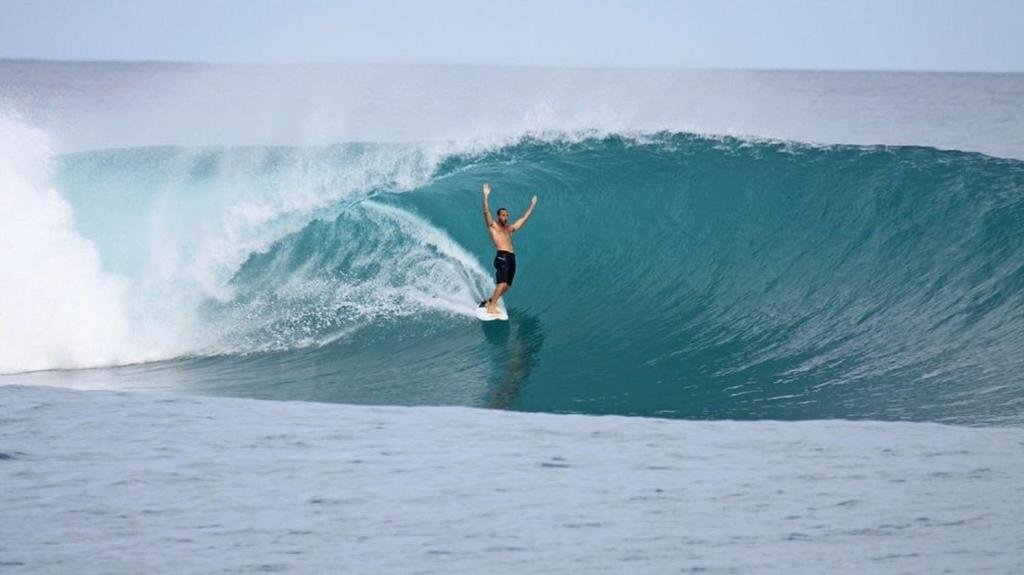
No, a Surfskate Won't Automatically Teach You to Surf
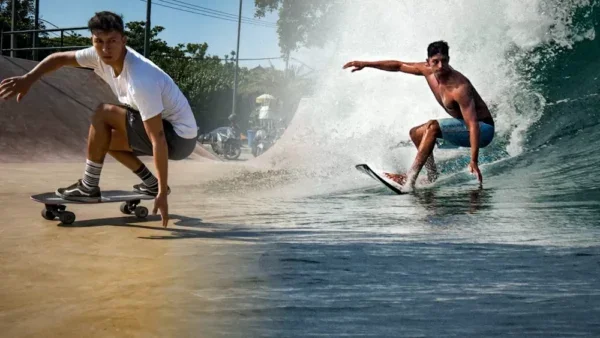
...maybe that's one of the most important things to say right now, especially at a time when surfskating and surfing are often talked about as if they're basically the same thing, just with a different board under your feet.
They're not.
A surfskate can be an incredibly useful tool for surfers — for anyone who wants to improve their coordination, or train their lines, rhythm, compression, extension, and body awareness.
But a surfskate is not surfing.
The ocean moves. The wave changes. A surfboard floats. Nobody hands you the takeoff. And you don't learn the lineup — currents, priority, timing, positioning — on flat ground or a skate structure.
That said: used well, with method and a clear goal, a surfskate can become one of the best dry-land training tools for improving certain fundamental aspects of surfing.
The whole difference comes down to this: it's not what you do, it's how you do it.
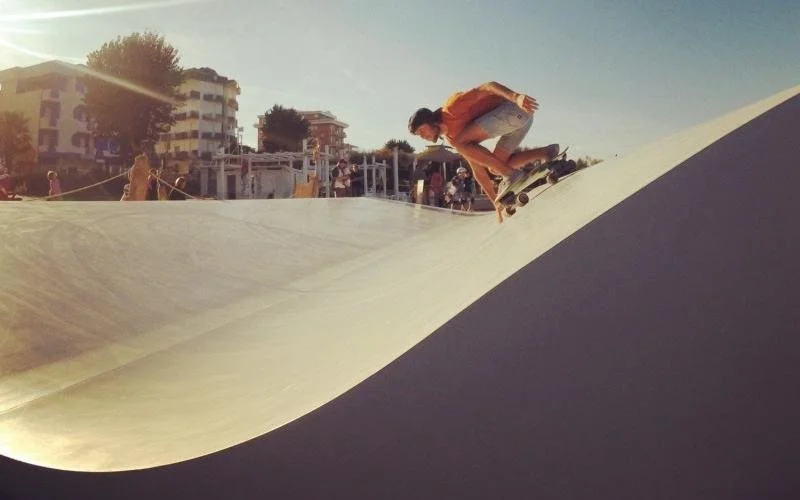
The Big Misunderstanding: Surfskating Doesn't Mean Surfing
The problem isn't the surfskate. The problem is the wrong message.
Surfskating has grown enormously in recent years because it's fun, accessible, great to watch, and closely mirrors the visual language of surfing. A board, a sideways stance, fluid movement, wide carves, arms flowing along, legs compressing and extending.
Visually, it looks like surfing.
But looking like surfing doesn't mean it is surfing.
In surfing, the environment decides everything. The wave doesn't wait. It's never quite the same — different speed, different wall, different amount of space every time. You have to read the ocean, pick the right spot, paddle, catch the wave, pop up at the right instant, and then adapt in a split second.
On a surfskate, on the other hand, the environment is far more controllable. The asphalt, the concrete, the wood, the ramps and structures — they don't move. The board responds instantly, you generate your own speed, and you can repeat the same movement dozens and dozens of times.
That's its strength. But it's also its limitation.
A surfskate lets you repeat, correct, feel your body, work on technique, and build muscle memory. But it can't, on its own, teach you to read the ocean, catch a wave, handle a takeoff, or know where to sit in the water.
So no — riding a surfskate doesn't mean you know how to surf.
But it can help you surf better, if you know what you're actually training.
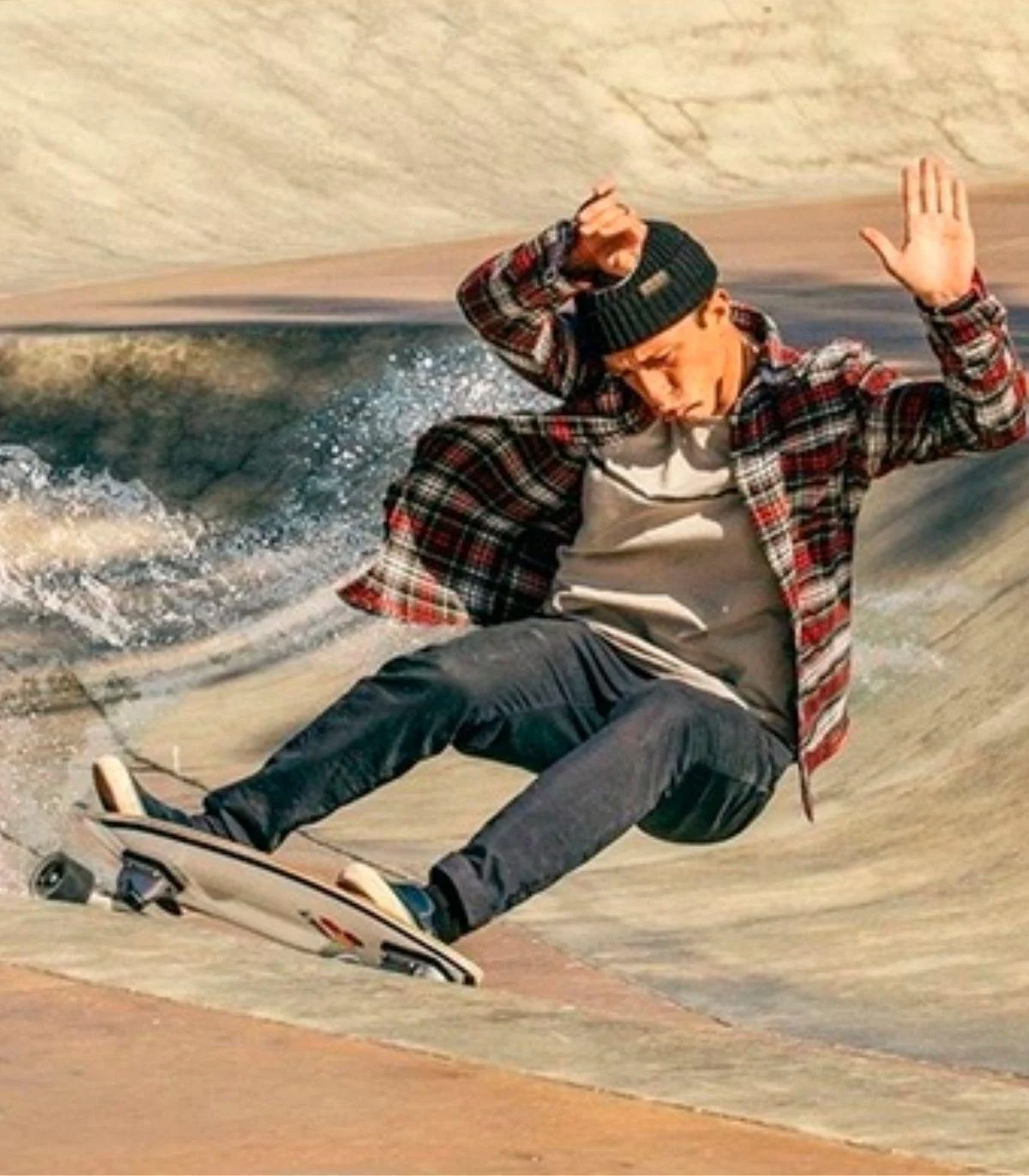
What Actually Transfers From Surfskating to Surfing
When we talk about surfskating and surfing, the key word is transfer.
Transfer means how much a skill trained in one context carries over and becomes useful in another.
With surfskating, certain qualities can transfer meaningfully to surfing — not because the two are identical, but because they work similar motor principles.
And this is where we need to be precise: a surfskate doesn't replicate the ocean, but it can help you train your body, your coordination, and your movement awareness more effectively.
In practice, it can help you build some technical foundations that you'll still need to learn to apply in the water.
Compression and Extension
In surfing, speed doesn't just come from the board. It comes from how you use your body on the wave face.
Compression and extension are the foundation of pumping, speed management, entering a turn, and coming out of a maneuver.
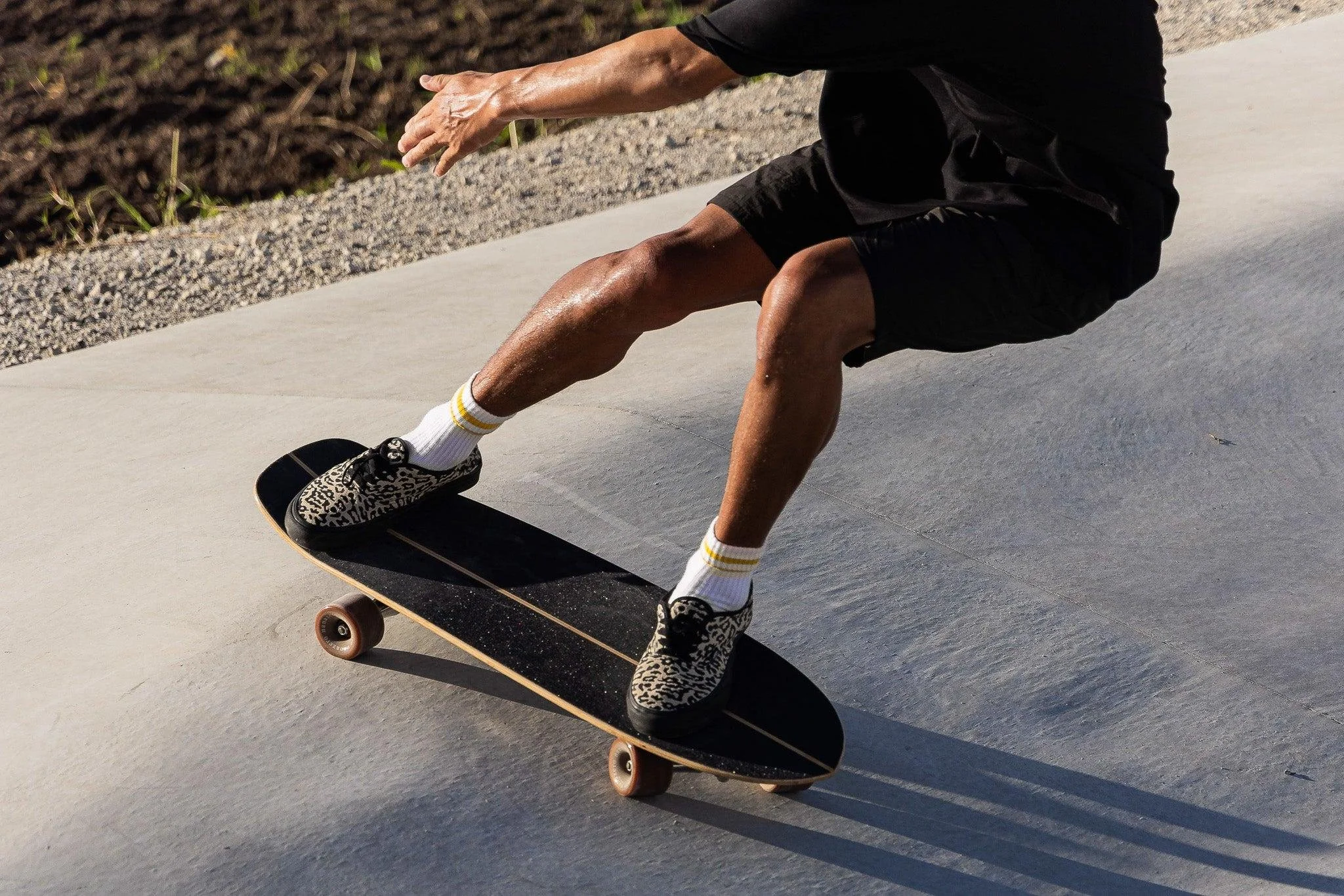
You can train this mechanism really well on a surfskate: loading your legs, lowering your center of mass, extending at the right moment, and avoiding moving only from the shoulders.
This is one area where a surfskate can genuinely help.
Not because it perfectly copies the wave, but because it forces you to understand something simple: speed comes from the body, not from chance.
Timing
In surfing, the right movement at the wrong moment is still wrong.
You can have great technique, but if you extend too early, compress too late, open your shoulders off-time, or close out a turn before the board is ready, the maneuver loses its power.
A surfskate lets you work on timing because you can repeat the same motion in a controlled setting.
You can feel exactly when the board accelerates. You can recognize when you're anticipating too soon. You can fine-tune the relationship between your legs, hips, torso, and eyes.
Here, the surfskate becomes a kind of technical lab.
In the water, you only get a few waves and very little time to figure out what went wrong. On land, you can repeat the same mistake twenty times, correct it, and finally stop blaming the board.
Which is convenient sometimes — but doesn't always work.
Line and Trajectory
A surfer shouldn't just think about the single maneuver. They should think about the line.
Where am I entering? Where do I want to go? How much space do I have? Am I generating speed or losing it? Am I surfing the wave face, or just making random movements?
A surfskate can be a big help in building lines.
You can draw out trajectories, use cones, and work on bottom turns, cutbacks, roundhouses, changes of direction, spacing, and flow.
The important part is not turning the whole thing into a dance routine on asphalt.
Surfing isn't just "making movements that look good." Surfing is using movement to be in the right part of the wave.
So even on a surfskate, the question should always be: would this line actually make sense on a wave?
If the answer is no, it might still be fun — just don't call it surf training.
Coordination Between Eyes, Shoulders, Hips, and Board
One of the most common mistakes, in both surfing and surfskating, is moving different parts of the body disconnected from each other.
Arms flailing, shoulders over-rotating, a locked hip, stiff knees, eyes glued to the board.
The result: a lot of show, not much actual efficiency.
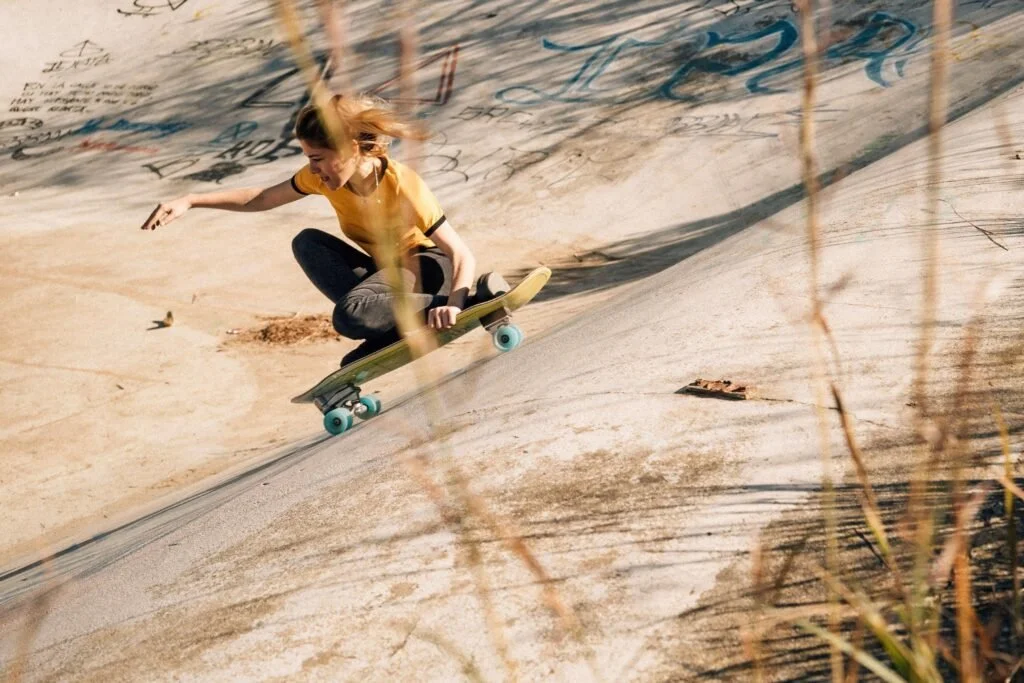
A surfskate helps you work on overall body coordination. It forces you to understand that the board follows the body — but the body has to know where it wants to go.
The eyes lead. The shoulders follow along. The hips transmit the movement. The legs manage pressure and release. The board responds.
When that sequence works, the movement becomes smoother, more readable, and far more useful from a surf-training standpoint.
And this is where a surfskate can genuinely become an educational tool.
What Doesn't Transfer: The Limits of Surfskating
Now comes the less comfortable part — but the more honest one.
There are things a surfskate simply doesn't teach you. Or more accurately, it can't really teach you, because they belong to the ocean.
Saying that doesn't diminish surfskating — it's about respecting both disciplines.
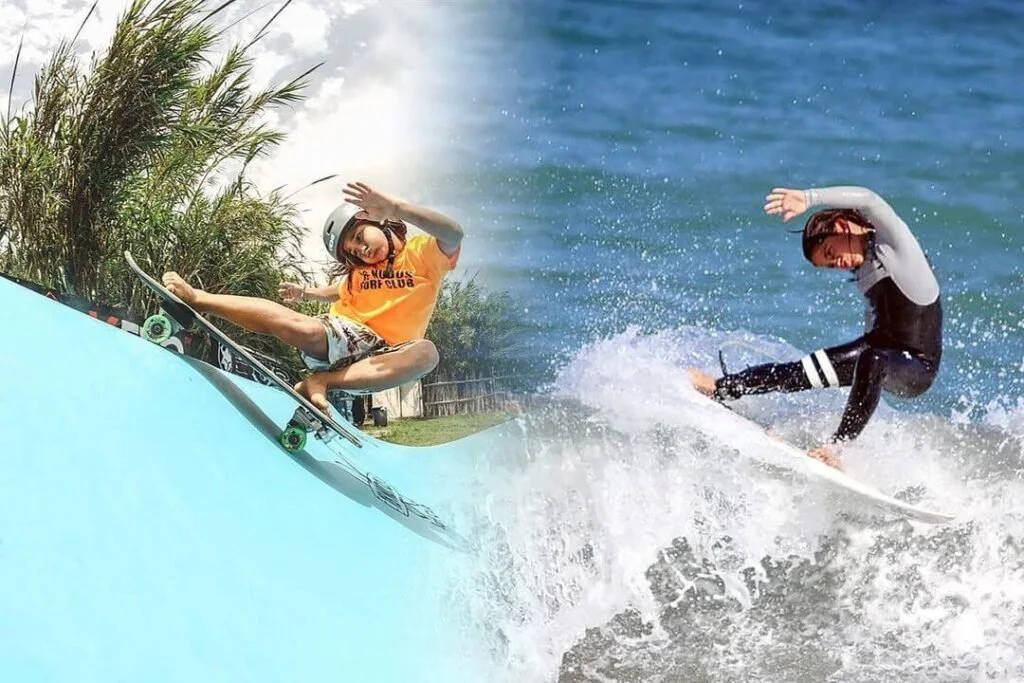
A surfskate can train movement, coordination, timing, and certain technical lines. But surfing is something else entirely: it's water, wave-reading, currents, wave speed, takeoffs, positioning, priority, section selection, and the ability to adapt.
If the story being told is that riding a surfskate alone is enough to learn how to surf, that's selling people a shortcut — and it's the wrong story to tell.
Reading the Wave
You don't learn to read a wave on flat ground, in a pump track, or in a bowl.
You can study lines and trajectories. You can understand the logic of a turn. You can simulate a wave face.
But the ocean is alive.
Every wave is different. Speed, shape, energy, direction, wall, and section all change. You have to figure out where it's forming, where it will break, where to start, whether it will open up or close out, whether you need to go high, low, fast, or wait.
That ability is built in the water.
A surfskate can prepare you to move better. It can't read the wave for you.
The Takeoff
The takeoff is one of the most important moments in surfing.
It's not simply "standing up." It's the connection between paddling, entering the wave, balance, speed, timing, and your first direction.
On a surfskate, you're already standing.
In surfing, you have to go from lying down to standing up while the board is accelerating, the wave is picking you up, the water is moving, and you have to decide on a direction — all at once.
Training your position, mobility, stability, and coordination can help.
But the real takeoff is built mostly in the water, wave after wave, mistake after mistake.
A surfskate can prepare the body. The ocean teaches you the moment.
Positioning
In surfing, you can have beautiful technique, but if you're always in the wrong spot, you won't catch waves.
Positioning is a massive skill on its own: knowing where to sit, where the peak breaks, how to read sets, how to handle currents, when to move, which wave to go for, and how to respect priority and right of way.
A surfskate doesn't teach you any of that.
It can make you more prepared once you're finally on the wave. But you still have to get there first.
And that's where the ocean sends the bill.
Managing Fear and the Environment
In the water, there are factors that simply don't exist on asphalt.
Waves bigger than expected, current, other surfers, the seafloor, wipeouts, fatigue, being out of breath, a runaway board, a set rolling in while you're in the worst possible spot.
A surfskate doesn't replicate any of those sensations.
It can give you motor confidence, balance, and comfort with lateral movement. But it doesn't replace real experience in the ocean.
And that's not a knock on surfskating.
It's simply respect for surfing.
When Surfskating Really Does Help a Surfer
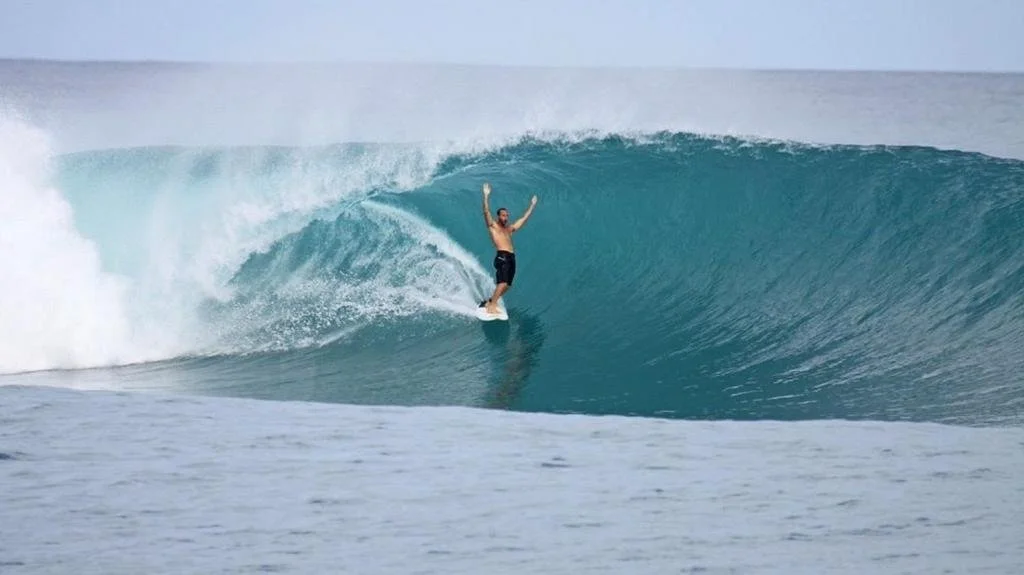
A surfskate genuinely helps when it's used with a specific goal in mind.
Just hopping on and carving around at random, hoping your surfing magically improves, isn't enough.
A surfskate becomes useful when you're working on posture, stance, compression, extension, weight management, eyes, rhythm, lines, coordination, speed control, and flow between maneuvers.
For a beginner, it can help build confidence with balance, sideways stance, and body control.
For an intermediate surfer, it can help clean up obvious issues: stiffness, choppy movement, arms out of control, turns with no real line.
For a more advanced surfer, it can become a technical tool for fine-tuning details: timing, transitions, rail-to-rail movement, bottom turns, cutbacks, compression on entry, and release on exit.
The key is method.
Just riding a surfskate isn't enough. Riding it the right way, with the right approach — that changes everything.
When It Creates Bad Habits Instead
A surfskate can help, but it can also build bad habits.
Especially when it's used without any technical correction.
The point isn't to demonize surfskating. The point is making sure it doesn't turn into a machine for repeating mistakes.
If you repeat a correct movement a hundred times, you build technique. If you repeat an incorrect movement a hundred times, you build a very well-trained problem.
And that's the moment a surfskate stops being a useful tool and becomes just a nice illusion on four wheels.
Mistake 1: Pumping Only With the Shoulders
This is one of the most common mistakes.
The rider swings their arms and torso around like they're trying to wave off mosquitoes in the lineup: the board turns, it looks like something's happening, but underneath, there's no real weight management going on.
In surfing this becomes a problem because the shoulders take over too much, the body loses connection, and the board doesn't work efficiently.
Speed shouldn't come from chaos.
It should come from pressure, release, timing, and trajectory.
Mistake 2: Turns That Are Too Flat
On a surfskate, it's easy to turn on a flat surface and feel fluid.
The problem is that surfing doesn't happen only on the horizontal plane.
In surfing, the line isn't simply left-right — it's up-down, compression-extension, acceleration-deceleration, entry-exit.
If you only train flat turns, you risk building a movement that looks nice but doesn't transfer well to the water.
A surfskate becomes truly useful once you start thinking as if you had a wave face in front of you: where you enter, where you load up, where you release, where you want to exit.
Mistake 3: Looking at the Board
If you're watching your feet, you're already late.
In surfing, your eyes are essential: you look where you want to go, you read the section ahead, you anticipate the line, and you get your body ready for the next direction.
On a surfskate, a lot of riders spend too much time watching the board under their feet.
The result: closed-off, stiff, late movement.
You shouldn't stare at the board. You should feel it.
Your eyes need to anticipate the maneuver, not check whether your shoes are still in place. Spoiler: they usually are.
Turning isn't enough.
You need to give that turn a direction.
Mistake 4: Confusing Style With Technique
Style is personal. Technique, on the other hand, has to actually work.
The problem starts when people copy the aesthetics of surfing without understanding the mechanics behind it: exaggerated arm swings, over-the-top movements, fake compressions, imaginary spray on the asphalt.
Looks great for the reel. Looks a lot less great once you're actually in the water and reality hits differently.
A surfskate shouldn't imitate surfing theatrically.
It should train principles that are actually useful for surfing: line, rhythm, pressure, release, coordination, and control.
Function comes first. And if you really want to look the part, at least do it with some substance behind it.
Bottom Line: A Surfskate Helps If You Know What You're Training
A surfskate doesn't create bad habits on its own.
It creates them when it's used without a goal, without correction, and without understanding which part of the movement is actually supposed to transfer to surfing.
Turning isn't enough. Pumping isn't enough. Looking like a surfer isn't enough.
You need to know exactly what you're training: pressure, release, timing, line, eyes, coordination, and control.
Everything else is choreography.
Nice-looking, maybe.
But still just choreography.
So What Is a Surfskate Actually Good For, When It Comes to Surfing?
A surfskate is good for preparing your body and your movement more effectively.
It's not there to replace the ocean.
That distinction changes everything.
It can help you understand how to generate speed, how to use compression and extension, how to coordinate your eyes, shoulders, hips, and board, how to build more sensible lines, and how to repeat technical movements in a controlled way.
But then that movement has to be taken into the water.
And there, everything changes: the timing changes, the speed changes, the wave face changes, the pressure changes, reading the wave changes.
That's why a surfskate really works when it's used as preparation — not as a replacement.
It's a bridge. It's not the destination.
So: Does a Surfskate Teach You to Surf?
The most honest answer is: no, not on its own.
A surfskate doesn't automatically teach you to surf.
It doesn't replace the ocean. It doesn't replace paddling. It doesn't replace the takeoff. It doesn't replace reading the wave. It doesn't replace positioning. It doesn't replace real experience in the water.
But it can train motor skills that are genuinely useful for surfing.
It can improve your posture. It can help you better understand compression and extension. It can help you coordinate your eyes, shoulders, hips, and legs. It can let you repeat movements you'd rarely get the chance to practice in the water. It can make you more aware of your body and your lines.
The bottom line is simple: a surfskate isn't a shortcut.
It's a tool.
And like any tool, it depends on who's using it, how they're using it, and the method behind how it's taught.
If you use it to put on a show, you'll put on a show.
If you use it to train, you can genuinely improve.
If you use it thinking it replaces surfing, the ocean will bring you back to reality fast.
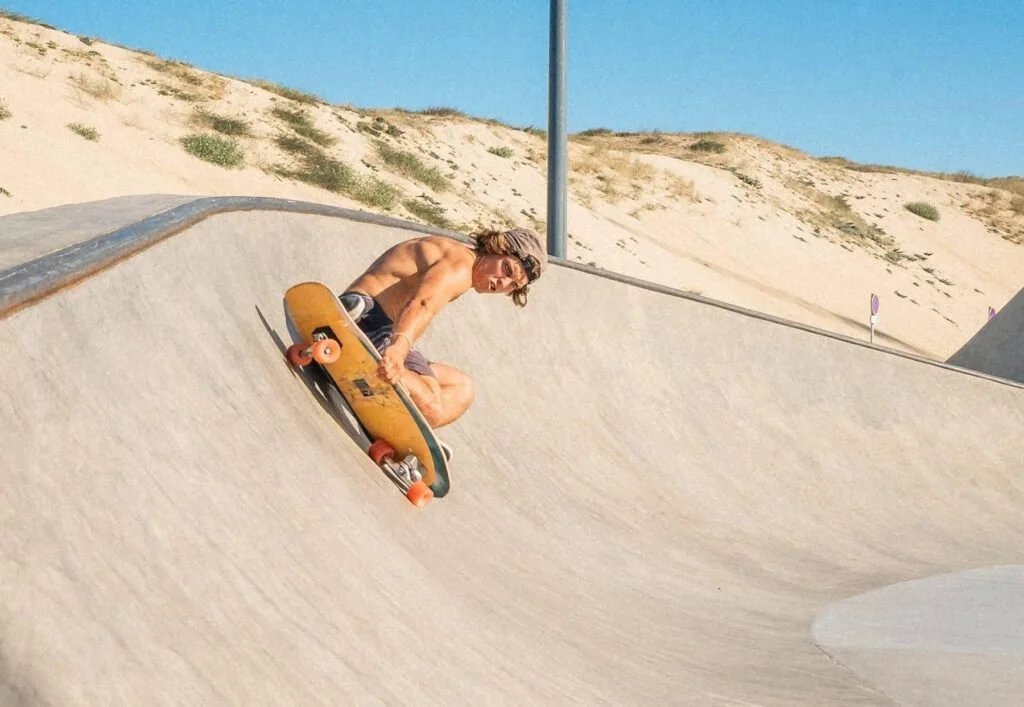
Do You Really Want to Improve Your Surfing Using a Surfskate?
At SurfSkateItaly, we talk about surfskating for what it truly is: not a shortcut to becoming a surfer, but a technical, fun, and powerful discipline — when it's used with method.
If you're serious about improving, look for a certified school or coach, or a community that knows how to correct your movement, not just spin you around in circles.
A surfskate can help your surfing.
But only if we stop selling it as magic.
And start teaching it as a tool.

Written by Andrea Grandi. Originally published on Surfskate Italy.
Andrea “Pakino” Grandi – Founder of Surfskate Italy | Surfskate Coach
He is the founder of Surfskate Italy and a member of the FISR (Italian Roller Sports Federation) instructor system (SIRI) for surfskating in Italy. He is one of the most recognizable and active figures in the development of the Italian surfskate movement.
A tireless content creator, Andrea is a leading advocate for surfskating in Italy, with a unique ability to turn every session, event, or project into engaging content that inspires and connects the community.
Through Surfskate Italy, he organizes events across the country and leads masterclasses and training sessions, contributing to the technical and cultural growth of new riders and enthusiasts.
He likes to describe his style as "rock," but in truth, it’s more like a well-crafted "pop-rock"—accessible, engaging, and tasteful. It is precisely this blend that has made him a key reference point within the scene.